What the Table Is Holding
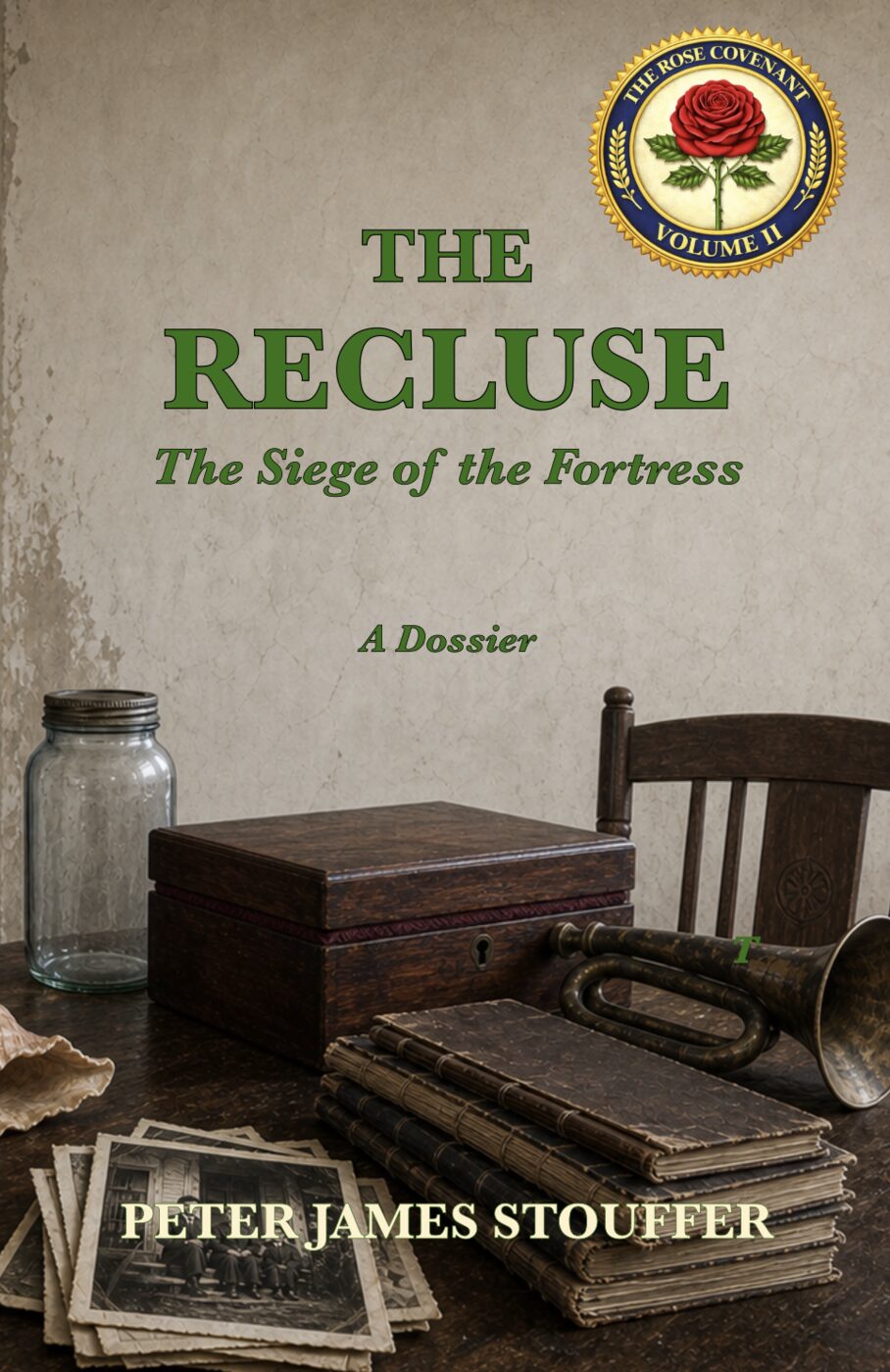
On the cover of this book, there is a table. A mason jar. A wooden box with a lock. A chair pulled close. A stack of bound journals. A handful of photographs. A shell, half out of frame at the table's edge. It's a photographer's arrangement, not a found one - arranged toward what the book is: objects that outlasted whoever handled them, waiting to be read.
Old houses do not give themselves up all at once. A floor tells you where people walked. An old image gives you faces without explanations.
For me, The Recluse began there: not with a plot, but with evidence.
Whatever's inside that jar has been sealed a long time. Whatever's inside that box, longer. The dossier itself is bound now, and it's available - in print and ebook.
The Excursion opened the series: land, grief, maintenance, witness, the argument that hope is a discipline, not a feeling.
Then I had to write the book underneath it - not a sequel, but a descent into the matter beneath the first volume: the house, the records, the damage, the question of what it means for a place to keep speaking after the people who made it are gone.
The box on the cover has a lock built into it. That was never decoration. That was the promise.
In a normal series, the second book moves forward. The Rose Covenant moves backward - each volume earlier than the last. The reader moves forward through the series by moving backward through history.
Reverse chronology is fun for the same reason it is hard. It lets the reader know the effect before the cause. The reader is not asking, "What happens next?" The reader is asking, "What already happened here?"
This is a different suspense - not the suspense of speed, but the suspense of excavation.
The historical record is indispensable, and incomplete. It can tell you who owned a parcel. It cannot tell you what it felt like to remain. Fiction enters that gap, asking what kind of life could have left the evidence we still have.
The Recluse had to be written as a dossier. It withholds conclusions because old places withhold conclusions. You get what survived, and what survives is rarely clean.
The second-book problem sat inside all of this. The Recluse had to stand on its own while keeping faith with The Excursion - deepening the world without narrowing it.
There are six more volumes behind this one, each set earlier than the last. The house had to be a house before it could bear any weight beyond itself.
So the work became an apprenticeship to the material: the board, the threshold, the smell of old paper, the difference between ownership and custody. Let the moral pressure emerge from the thing itself. Do not make the past easier than it was. Do not make endurance prettier than it is. Do not mistake silence for peace.
The joy, when it comes, comes from discovering that the structure can hold - that the plan has stopped being an outline and become a load the book can actually bear. Not backward as a trick. Backward as excavation, because a life, a family, a house, and a country are all built from things handed forward by people who did not know who would receive them.
The Recluse is the first descent. If The Excursion asked whether hope can survive in a damaged world, The Recluse asks what kind of custody makes that survival possible - what a house keeps, and what it asks from those who inherit it.
The dossier is available now, in print and ebook.
Read it slowly. Let the house speak before deciding what it says. If you began with The Excursion, come back now to the layer underneath it.
The jar, the box, the journals, the photographs. That's the whole book, arranged on a cover, waiting to be read.
There is something in this house that has been waiting.
- Peter James Stouffer
Rose Township, Michigan
2026