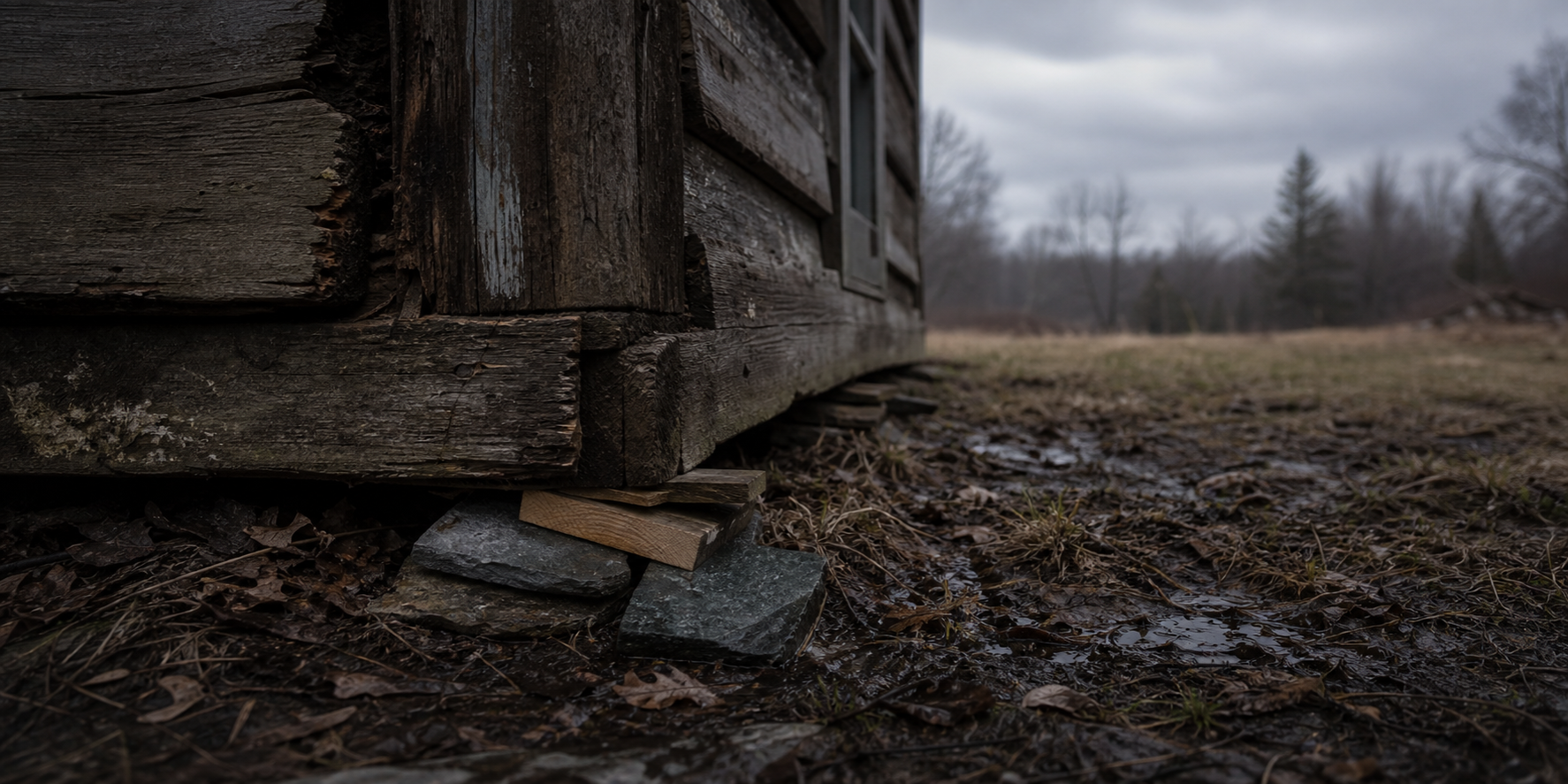
The corner post was going. You could see it from the edge of the clearing — the slate shims, placed eighty years ago to level the floor, had slipped into the muck. The man living in that cabin had watched it happen and let it. "He refuses to shim the foundation," Samuel said, tapping the rotting railing with his hickory pole. The hollow thud carried across the marsh. "He says he wants to see how long it takes for the earth to take it back."
He had an answer for the pole. The swamp is honest. The rot is coming regardless. Everything you patch will fail eventually. Every shim will sink, every porch will splinter, every stone will weather down to gravel. Why extend the pretense?
Samuel had heard it. "A house is like a reputation: it takes years to build and about one rainy season to ruin. If you stop shimming the floorboards, you aren't making a philosophical statement. You're just making a compost pile."
The rot is real. The question is what you do with that fact.
* * *
Samuel drove past her house at 5:00 a.m. to check a survey line. The kitchen light was already on. Six brown bags lined up on the counter — one for each child. Mary Higgins worked the morning shift at the dry cleaners, the lunch shift at the diner, the night shift scrubbing floors at the elementary school. "She didn't grieve," Father Tom said. "She didn't have the time."
Her coat was ten years old. She pressed it sharp enough to cut paper. When she died, her bank account had exactly enough to pay for the headstone, with zero left over. She balanced the ledger to the penny. Three teachers. A nurse. Two mechanics. That was the output of the kitchen at 5:00 a.m., every single day, for years.
Father Tom kept different accounts. In the cemetery behind St. Jude's, he knew which stone belonged to which story, which grief had been carried by which family across which generation. "Every stone here is a contract," he said. "A promise that someone lived, someone was loved, and someone was left behind to pay the bill for the carving. This isn't a landfill. It is a library." Nobody's life depended on that library. The dead don't require an archivist. He kept it anyway.
* * *
Back at the cabin, the books were everywhere — towers of philosophy rising from the rotting linoleum, the shelves long gone. But they were stacked in straight piles. Samuel noticed. "A man can preach that the world is pure chaos, but still stacks his books in straight piles. If he really believed in the void, he wouldn't be so worried about keeping it tidy."
The man who let the cabin go to muck couldn't stop stacking his books. He kept something even in the ruins of his keeping. Not because he had decided to. He was still here. That was enough.
"Our job is not to fix the world permanently; it's just to keep the rain out for one more night. The survey is done. The rest is just maintenance."